U.S. Constitution Web
U.S. Constitution Web
Defending America's Founding Principles
Patriotism in U.S. Education
Patriotic education is making a comeback in U.S. schools, exemplified by moves like Texas House Bill 2497. The bill aims to promote Texan values by distributing pamphlets at DMV offices. This push for patriotic education is spreading across states, focusing on presenting a version of history...
Read more →Constitution's Everyday Role
The U.S. Constitution establishes the government's structure, dividing power among executive, legislative, and judicial branches . This system of checks and balances prevents any single branch from dominating. The legislative branch, split into House and Senate, debates and negotiates laws. The...
Read more →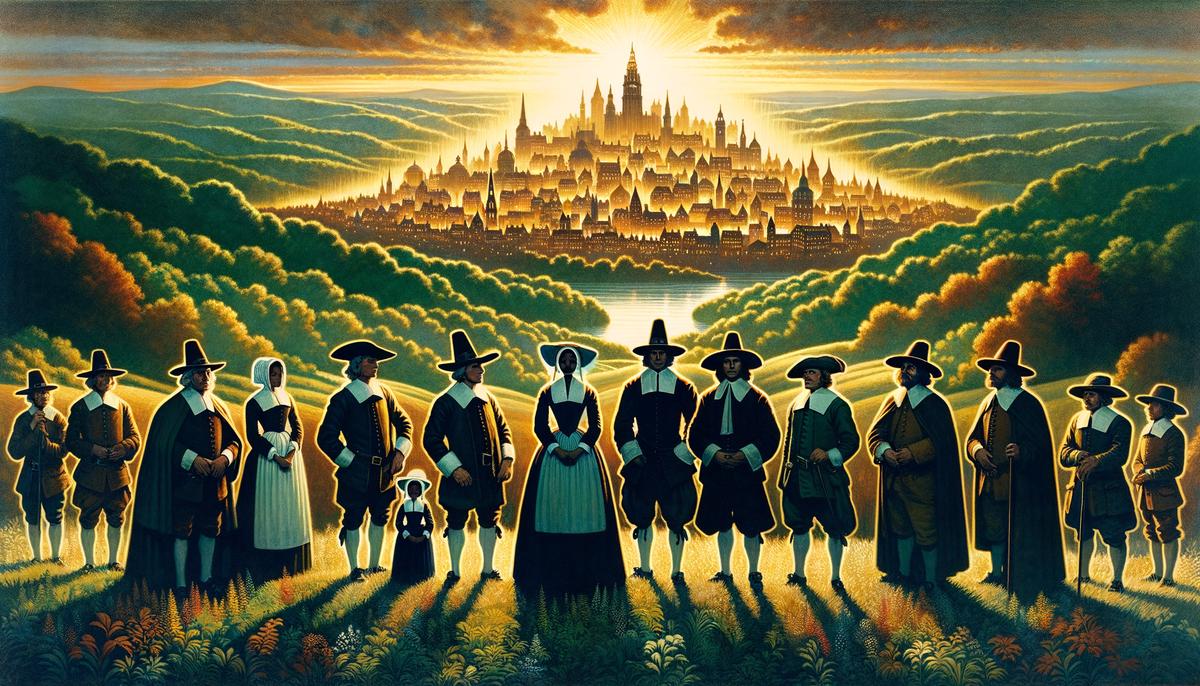
American Exceptionalism
The Puritans, early American settlers, believed they had a divine mission to build a "City upon a Hill." This idea of being God's chosen people laid the groundwork for American exceptionalism. The Founding Fathers expanded this concept into national doctrine. They crafted a new political system...
Read more →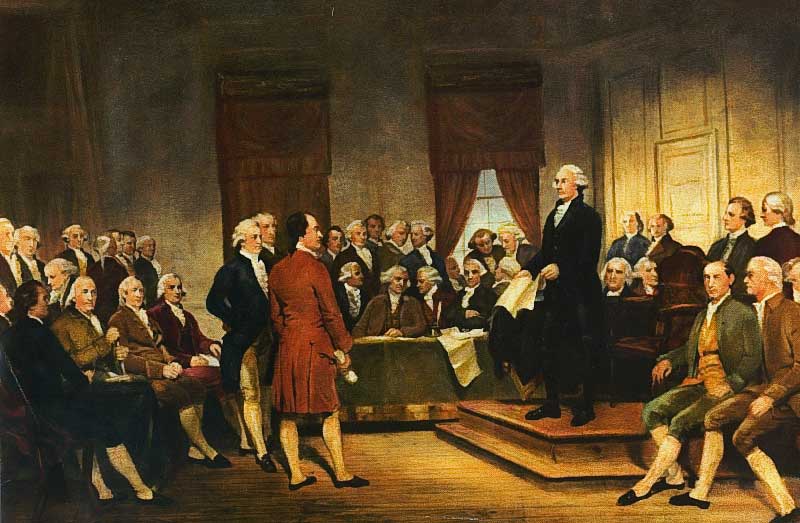
Checks and Balances in U.S. Government
Montesquieu, inspired by Polybius' thoughts on Rome's power structures, advocated for the separation of powers. At the 1787 Constitutional Convention, the framers aimed to prevent tyranny by creating a struggle between legislative, executive, and judicial branches. James Madison emphasized this in...
Read more →Federalist Papers' Impact
The Articles of Confederation proved inadequate for governing the United States. The Constitutional Convention of 1787 aimed to create a more effective centralized government. Alexander Hamilton, James Madison, and John Jay wrote The Federalist Papers to promote ratification of the Constitution,...
Read more →Not Receiving Our Emails?
Step 1: Check your Spam Folder. Click the “Not Spam” button if you see it in the spam folder. This will move the email to your inbox, and ensure delivery to the inbox next time. Step 2: Add [email protected] to your contact list. Attention Gmail Users! Gmail puts our emails in the...
Read more →
Patriot Act and Civil Liberties
After 9/11, Congress rushed through the Patriot Act with minimal debate. The Bush administration, backed by Attorney General Ashcroft, pressured lawmakers to pass the bill quickly, citing imminent threats. Senator Leahy's attempts to slow the process were ignored, and Senator Feingold cast the lone...
Read more →Vaccine Mandates vs. Rights
Jacobson v. Massachusetts, now there's a name that's been around the block in the old legal playbook. This 1905 case laid the ground rules for how far states can go with vaccinations. During a smallpox outbreak, the Supreme Court gave states the nod to enforce mandatory vaccinations, even slapping...
Read more →
Sanctuary Cities and Federal Law
Sanctuary policies are like a wild rodeo through the American legal landscape. These rules make local law enforcement do the cha-cha rather than run a marathon with federal immigration laws. They say, "ICE, this is your rodeo, not ours," and who wouldn't want to let their neighbor handle their...
Read more →
Electoral College Reform
The Electoral College, a compromise between small and large states, was designed to filter the electorate's whims. However, its relevance has diminished over time. Elections like those in 2000 and 2016, where the popular vote winner lost, have intensified criticism. The system faces objections for...
Read more →
Right-to-Work Laws & Unionization
The National Labor Relations Act of 1935 granted workers legal support to form unions. The Taft-Hartley Act of 1947 allowed states to implement right-to-work laws, giving workers the option to opt out of union dues. Businesses advocated for these policies to limit union influence and improve the...
Read more →Constitutional Military Interventions
Article I, Section 8 of the U.S. Constitution gives Congress the authority to declare war, raise and support armies, and maintain a navy. This authority balances power, keeping presidential decisions in check. The War Powers Resolution of 1973 was Congress's attempt to constrain the executive...
Read more →
Death Penalty Constitutionality
The death penalty's legal history in America has been tumultuous. The 1972 Furman v. Georgia case halted executions nationwide, declaring existing laws unconstitutional under the Eighth Amendment. In 1976, Gregg v. Georgia allowed states to resume executions with revised guidelines. Despite...
Read more →Religious Freedom in Schools
Kennedy v. Bremerton School District: A high school football coach's sideline prayers sparked debate on religious expression in schools. The Supreme Court had to decide if this crossed a line. Flashback to 1962's Engel v. Vitale : The court unanimously banned state-sponsored prayer in public...
Read more →
State Marijuana Legalization
State marijuana legalization has been inconsistent. Colorado and Washington legalized recreational cannabis in 2012, defying federal laws. Vermont and New York followed in 2022. D.C. and Guam have faced challenges implementing sales. South Dakota's 2020 voter-approved amendment was overturned by...
Read more →
Affirmative Action and Equal Protection
The Supreme Court's ruling in the Student for Fair Admissions case overturned decades of precedent on race-conscious admissions policies. The verdict deemed using race as a factor in admissions unconstitutional under the Equal Protection Clause . The Court applied strict scrutiny, finding...
Read more →Balance of Power in Government
The U.S. Constitution establishes three branches of government: legislative, executive, and judicial. This structure prevents any single branch from dominating. Congress makes laws, with the House and Senate balancing each other. The executive branch, led by the President, enforces laws but has...
Read more →Privacy vs. Surveillance
Surveillance in the United States has deep roots. The FBI's COINTELPRO programs in the 1950s and '60s targeted civil rights leaders like Martin Luther King Jr. and Malcolm X, gathering personal details with alarming intensity. Section 702 of FISA, originally meant to spy on foreigners without a...
Read more →
Constitutional Amendments vs. Legislation
Article V governs the amendment process, setting high bars for change. Proposals must gain two-thirds majority in Congress, then three-fourths of states must ratify. Only 27 amendments have passed in over 200 years. State constitutions see far more amendments - over 7,000 total - due to easier...
Read more →Limits on Presidential Pardons
Presidential pardons have long intrigued and sparked debate, offering a mix of mercy and controversy. This power, rooted in the Constitution, allows presidents to forgive federal offenses, yet it has limits and contentious uses. The Constitution grants presidents a powerful tool in pardons. The...
Read more →